
A Mother's IVF Journey: The Story of Hope, Resilience, and the Daughter She Never Stopped Fighting For

Every IVF journey begins differently.
For some families, it starts after months of trying to conceive. For others, it follows years of unanswered questions, medical appointments, and heartbreaking disappointments.
For the mother featured in this interview, the turning point came when doctors confirmed that her fallopian tubes were not releasing eggs naturally. IVF wasn't simply one treatment option it became her only path to becoming a parent.
Today, more than a decade later, she is raising a creative, compassionate twelve-year-old daughter who knows exactly how much she was wanted.
At ACRC Surrogacy, we believe stories like these help intended parents realize they are not alone. Medical science can make parenthood possible, but it is the determination of families that truly defines the journey.
This three-part interview follows one mother's experience from infertility and IVF to motherhood, honesty, and hope.
Part 1 — When Motherhood Didn't Happen the Way She Imagined
An Unexpected Diagnosis
Like many women, she imagined becoming a mother naturally.
Instead, she entered a period filled with uncertainty before receiving the diagnosis that changed everything.
Her doctors explained that her body was not releasing eggs through her fallopian tubes, making IVF her only realistic option for pregnancy.
For many intended parents, hearing those words can feel overwhelming.
An infertility diagnosis often comes with grief—not only because of the medical condition itself, but because it changes the future people had always imagined.
The Emotional Weight of Infertility
Throughout the interview, she openly discusses emotions that millions of people quietly experience:
wondering "Why me?"
feeling guilty
questioning her own body
navigating relationships
facing social situations where everyone else seemed to be growing their families
She also talks about the physical side of IVF—the medications, injections, appointments, and emotional uncertainty that often accompany fertility treatment.
Her honesty reflects what many intended parents experience but rarely discuss publicly.
You're Not Alone
According to the World Health Organization, infertility affects millions of people worldwide, making fertility treatment a reality for many families—not an exception.
Stories like hers remind us that infertility is a medical condition, not a personal failure.
Part 2 — Choosing Hope When IVF Became the Only Path
Finding the Strength to Continue
IVF is rarely a straight path.
There are moments filled with hope, moments filled with fear, and moments when continuing feels almost impossible.
During the interview, she reflects on what kept her moving forward despite setbacks.
Rather than allowing infertility to define her future, she chose to trust both modern reproductive medicine and her own resilience.
The Moment Everything Changed
One of the most emotional parts of the interview is hearing her describe the day she learned that IVF had worked.
After so much uncertainty, the positive pregnancy result represented far more than a medical milestone.
It represented hope becoming reality.
Like many IVF parents, she describes pregnancy after infertility as a unique experience—filled with excitement, gratitude, and understandable anxiety all at once.
The Day Her Daughter Was Born
She also recalls the moment she finally held her daughter.
Years of waiting, treatment, and emotional perseverance led to one unforgettable moment that made every challenge worthwhile.
Part 3 — The Conversation Every IVF Parent Wonders About
Telling Her Daughter the Truth
One of the most memorable moments in the interview happened years later.
During a disagreement, her daughter asked:
"Why did you have me if you don't want me?"
Instead of avoiding the conversation, she chose honesty.
She explained the incredible journey it took to bring her daughter into the world—the diagnosis, the IVF treatments, and how deeply she had always wanted her.
Rather than making IVF something secret, she transformed it into a story of unconditional love.
Growing Up Proud
Today, her daughter is twelve years old.
She is artistic, confident, compassionate, and an advocate within the LGBTQ+ community.
Knowing how she came into the world hasn't diminished her identity.
If anything, it has strengthened it.
She understands that she was loved long before she was born.
What Every Intended Parent Can Learn
One of the most powerful messages from this interview is that assisted reproduction does not make parenthood different.
Love is not measured by how a child is conceived.
It is measured by the commitment, sacrifices, and unwavering dedication shown every day afterward.
Why Stories Like This Matter
Medical advances continue to make IVF, egg donation, embryo testing, and gestational surrogacy possible for families around the world.
Yet behind every successful treatment is a deeply personal human story.
Sharing real experiences helps reduce stigma, encourages open conversations about infertility, and reminds intended parents that asking for help is a sign of strength—not weakness.
How ACRC Surrogacy Supports Intended Parents
At ACRC Surrogacy, we work with intended parents at every stage of their family-building journey.
Whether you're exploring IVF, considering egg donation, or pursuing gestational surrogacy, our team provides personalized guidance, trusted clinic coordination, and compassionate support from consultation through bringing your baby home.
Every family's path is unique, and we're committed to helping you navigate yours with confidence.
Book a confidential consultation today to learn more about your options and begin planning your next steps.
Frequently Asked Questions
Can IVF be the only option after an infertility diagnosis?
Yes. Depending on the underlying cause of infertility, such as blocked fallopian tubes or certain ovulation disorders, IVF may offer the highest chance of pregnancy. Treatment recommendations should always come from a qualified fertility specialist.
Is it common for parents to tell their children they were conceived through IVF?
Many families choose to discuss IVF openly in age-appropriate ways. Sharing the story can help children understand how deeply they were wanted and encourage healthy conversations about family building.
Is pregnancy after infertility emotionally different?
Many parents describe pregnancy after infertility as joyful while also carrying understandable anxiety because of previous experiences.
Can IVF, egg donation, and surrogacy be combined?
Yes. Depending on medical circumstances, intended parents may use IVF together with donor eggs, donor sperm, or gestational surrogacy as part of their family-building journey.
Where can I learn more about IVF and family-building options?
Speaking with experienced fertility professionals and surrogacy specialists can help you understand which options best fit your medical, personal, and family goals.
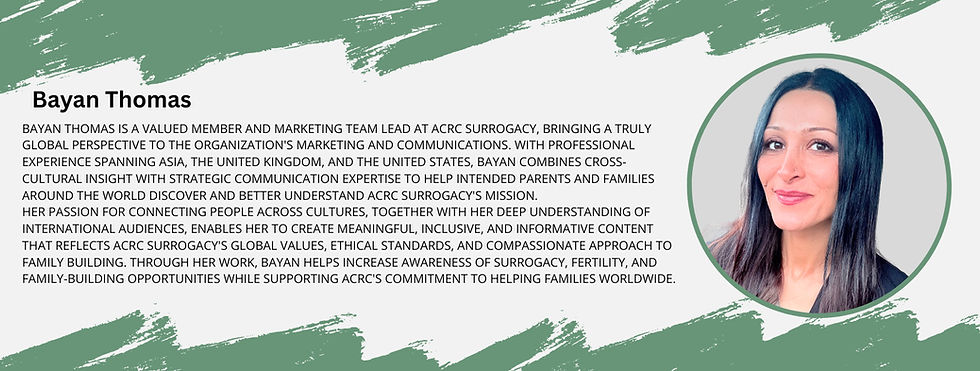
About the author:
Comments